 ×
Choosing for the Case and the Laboratory
When a new customer asks about ICERA zirconia, one question comes up repeatedly: “What is the difference between 3D and 4D?”
The answer needs more than a product number. A laboratory is choosing a material for a particular restoration, a particular aesthetic target, and a production process it must repeat reliably.
In our range, 3D is the more economical option, positioned to balance aesthetic requirements and purchase cost. We position 4D with greater emphasis on translucency and color presentation, at a higher price. That commercial positioning should be considered alongside the specifications and the actual case.
Start with the published ranges
The ICERA 2026 catalogue lists the following:
|
Property |
3D Multilayer |
4D Multilayer |
|
Translucency |
42–49% |
46–49% |
|
Bending strength after sintering |
700–1200 MPa |
700–1100 MPa |
The ranges overlap. Both products have a listed translucency upper endpoint of 49%, while 3D has the higher listed upper endpoint for bending strength.
These figures describe catalogue ranges. They do not provide a layer-by-layer map, identify the test position, or state that every restoration made from a disc will exhibit one endpoint. They also cannot establish that the two products will look identical in a finished case.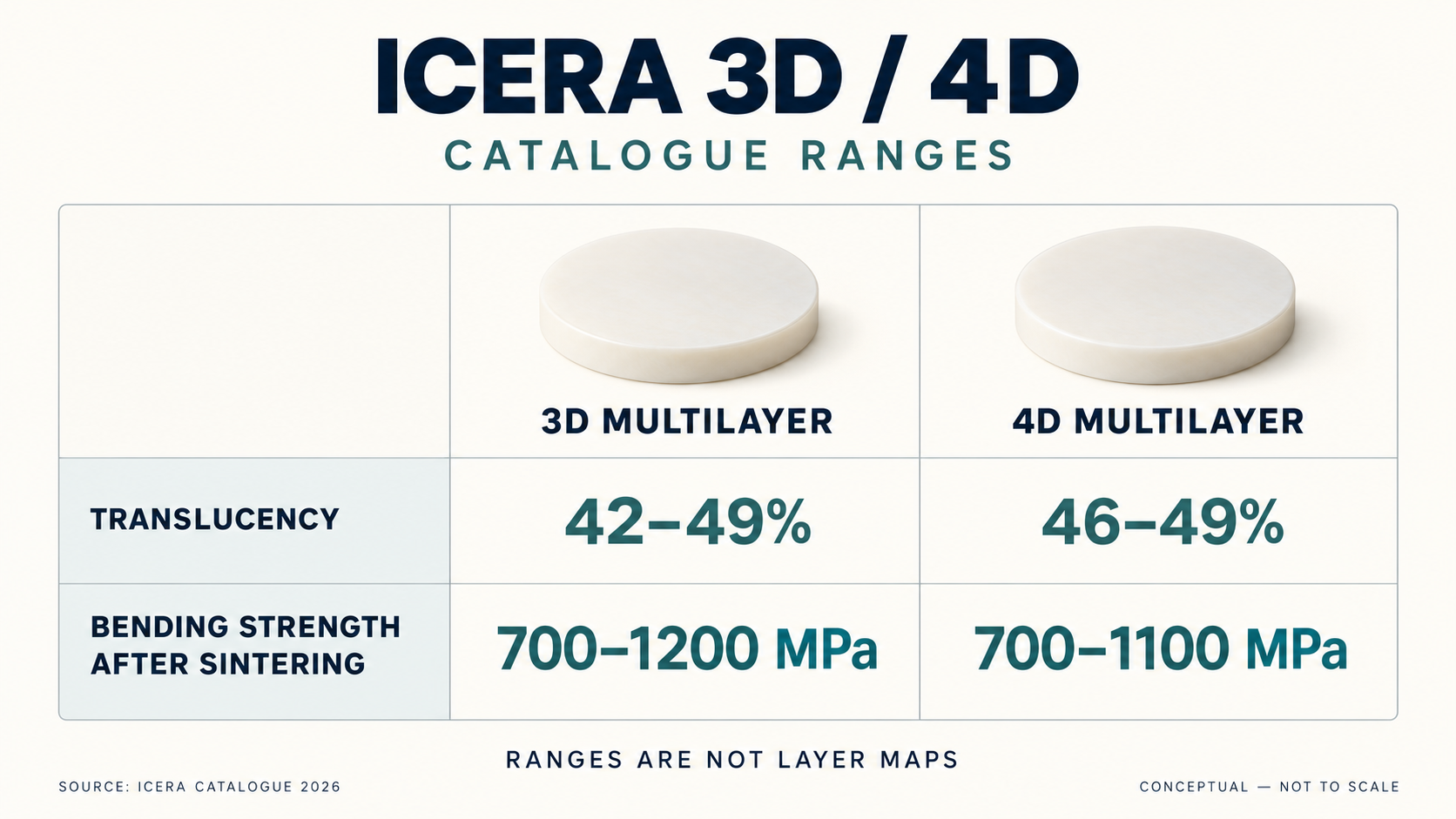
Figure 1. ICERA catalogue ranges. These values do not specify individual layer positions or test conditions.
Translate the positioning into a purchasing decision
For a laboratory managing a large number of routine cases, 3D's lower purchase price is a reasonable starting point for evaluation. The practical question is whether its finished result meets the laboratory's defined aesthetic and production requirements.
For work where the optical result receives greater priority, 4D is the product to include in that comparison. Its position in our range reflects an emphasis on translucency and color presentation. The laboratory should assess whether that difference is relevant to its cases and worth the price difference in its own workflow.
This assessment should use representative samples. Similar-looking photographs cannot establish optical equivalence, particularly when thickness, lighting, characterization, or background differ.
Read strength as part of a design decision
The difference between 1200 MPa and 1100 MPa at the upper endpoints is easy to notice. It is insufficient to select a restoration on its own.
A useful strength comparison also identifies the test method, specimen dimensions, surface condition, sintering conditions, sample location, and statistical result being reported. Mean strength, characteristic strength, and a product range answer different questions.
Research on other commercial multilayer zirconias has found differences among sampled layers and material systems. That supports asking where a test specimen came from; those findings do not establish the internal structure or layer performance of ICERA 3D or 4D.
For a demanding design, ask for the approved indication, minimum dimensions, connector requirements where relevant, and nesting instructions for the specific product. A catalogue maximum should never substitute for those details.
Define the optical target before comparing samples
“More aesthetic” is difficult to evaluate without a target.
Does the case need a particular value, a stronger cervical appearance, a controlled incisal transition, or a close match to an adjacent tooth? How much restorative thickness is available? What substrate will influence the restoration?
These questions help the laboratory decide what to look for in the comparison. An in-vitro study of a high-translucency multilayer zirconia found that shade, thickness, and surface treatment affected measured color. Its results belong to the tested material, but they reinforce the need to control these variables when comparing samples.
Evaluate 3D and 4D at comparable final thicknesses, with the same target shade, background, illumination, and finishing approach. Record each material's nesting position rather than assuming that matching product names or shade labels create equivalent samples.
Confirm the correct processing program
The product choice also affects processing.
In the supplied ICERA program tables for 1–6-unit restorations, the listed peak temperature is 1530°C for 3D and 1490°C for 4D. Both tables specify a 120-minute hold at the peak temperature.
These are selected parameters from the respective programs, not a complete firing schedule. The laboratory needs the complete program for the selected product and restoration category, together with the applicable equipment instructions.
When comparing two materials, process each according to its own instructions. Using one shared cycle may appear to simplify the trial, but it changes the question being tested. The useful comparison is how each product performs through its intended workflow.
The lower listed peak for 4D does not, by itself, establish faster production, lower energy consumption, or superior color. Those conclusions would require their own measurements.
What the powder source tells a buyer
Another frequent question concerns the raw material. We use zirconia powder supplied by Sinocera. The warehouse footage we have shared shows Sinocera-labelled powder containers in our raw-material storage area.
That is useful information about supply. It does not independently describe the formulation of each finished product or explain all differences between 3D and 4D.
For a detailed technical discussion, powder grade, formulation, manufacturing controls, and finished-product verification are separate subjects. A supplier name should be accompanied by the product information relevant to the buyer's decision. Specific powder-to-product relationships should be confirmed directly rather than inferred from a label seen in a warehouse video.
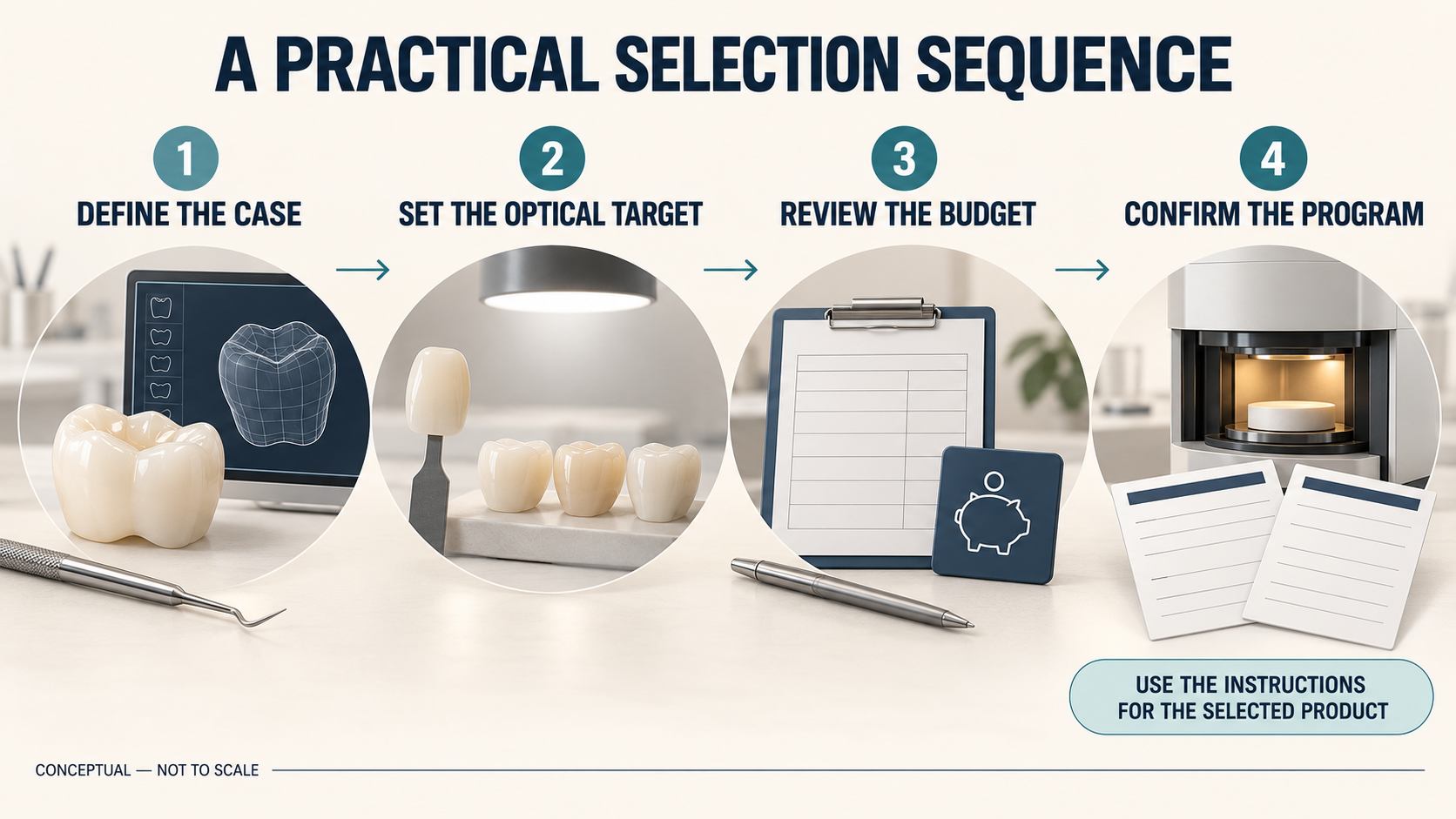
Figure 2. Define the case and optical target, assess the budget, and confirm the instructions for the selected product.
Run a small comparison around your own work
A practical evaluation can begin with a few representative cases or standardized sample designs. Define what an acceptable result looks like before fabrication.
Record the selected product and shade, final geometry, nesting position, processing program, finishing steps, and any corrections. Assess the finished units under consistent viewing conditions. Include active technician time and first-pass acceptance in the record, alongside the disc price.
This gives the laboratory a way to answer two separate questions: Does the material meet the target, and what does it cost to reach that target?
If 3D meets the required result within the intended application, its lower purchase price may support the laboratory's decision. If the evaluation shows a useful optical benefit from 4D for a particular case category, the laboratory has a concrete reason to choose it.
Build the order around the case
For distributors, the same approach makes the product conversation more useful. Ask what the customer produces, what aesthetic result they need, which equipment they use, and what documentation they require. Then explain the two products within that context.
The practical distinction is a choice between two positions in the ICERA range: 3D emphasizes value, while 4D places greater emphasis on optical presentation. Their overlapping specifications make case requirements and processing details essential to the decision.
When you enquire about 3D or 4D, send the restoration type, target shade, available thickness, and current processing setup. That gives us a clear basis for discussing the suitable product and the information needed to evaluate it.
#DentalZirconia #DentalLaboratory #MultilayerZirconia #DentalMaterials #CADCAMDentistry #MaterialSelection #DentalManufacturing


 EN

