 ×
×
Dental zirconia block is widely recognized for its exceptional biocompatibility, supported by extensive clinical evidence confirming its hypoallergenic nature. Unlike nickel-containing alloys or other reactive metals, zirconia elicits virtually no immune response in oral tissues—making it a preferred choice for patients with metal sensitivities or autoimmune conditions. Its smooth, non-porous surface also resists plaque adhesion, limiting bacterial colonization that can trigger gingival irritation. Research demonstrates that zirconia promotes robust soft-tissue attachment and reduces adverse tissue reactions by 92% compared to conventional restorative materials (SpringerOpen 2024). This translates clinically into lower rates of mucosal inflammation, allergic responses, and chronic periprosthetic discomfort.
Zirconia restorations induce significantly less gingival inflammation than metal-ceramic alternatives. Histological studies show a 68% reduction in pro-inflammatory cytokine expression—such as IL-1β and TNF-α—in tissues adjacent to zirconia crowns versus metal-based restorations. This advantage arises from zirconia’s chemical inertness: it does not corrode or release metal ions that provoke immune activation. Its low thermal conductivity further protects pulp tissues from temperature-mediated inflammatory stress. Collectively, these properties foster a more physiologic peri-implant and peri-restorative environment, supporting faster postoperative healing and long-term tissue stability. As confirmed in peer-reviewed research, zirconia’s biological neutrality contributes meaningfully to reduced peri-implantitis incidence relative to metal alloys Research published in 2024.
Digital impressions and CAD/CAM design eliminate the dimensional inaccuracies inherent in conventional impression materials. When milled from a dental zirconia block, restorations achieve marginal accuracy within ±40 microns—ensuring an exceptionally precise fit. This tight adaptation prevents cement washout and bacterial microleakage, two leading causes of secondary caries and postoperative sensitivity. On the occlusal surface, digitally optimized contours enable even distribution of masticatory forces across the abutment and opposing dentition. Uniform load transfer mitigates stress concentration, lowering fracture risk and reducing the need for post-delivery occlusal adjustments. With flexural strength routinely exceeding 1200 MPa, zirconia allows thinner restoration walls without compromising durability—preserving more natural tooth structure and enhancing long-term functional comfort.
The dental zirconia block supports fully digital same-day workflows: restorations can be designed, milled, sintered, and glazed in under two hours. This eliminates reliance on provisional restorations—which commonly dislodge, fracture, or irritate the pulp—and avoids multiple injections, repeated drilling, and extended healing intervals. Compared to traditional multi-visit protocols, same-day zirconia delivery reduces total chair time by up to 60%. For anxious or time-constrained patients, completing treatment in a single session meaningfully lowers anticipatory stress and improves treatment acceptance. Digital preview tools further enhance patient confidence by visualizing the final restoration before milling begins.
Dental zirconia block exhibits markedly lower thermal conductivity than metal alloys—approximately one-tenth that of cobalt-chromium—making it an effective thermal insulator. This property minimizes rapid heat or cold transfer from oral stimuli to the underlying dentin and pulp, directly reducing the incidence of transient thermal sensitivity. Patients consistently report fewer episodes of sharp, stimulus-induced pain when consuming hot or cold foods and beverages after zirconia restorations. Coupled with its precise marginal integrity and smooth surface finish, zirconia also prevents microleakage—the infiltration of acids, sugars, or bacteria into dentinal tubules—which is another well-documented pathway for postoperative hypersensitivity. Together, these attributes support superior sensory comfort both immediately after placement and over time.
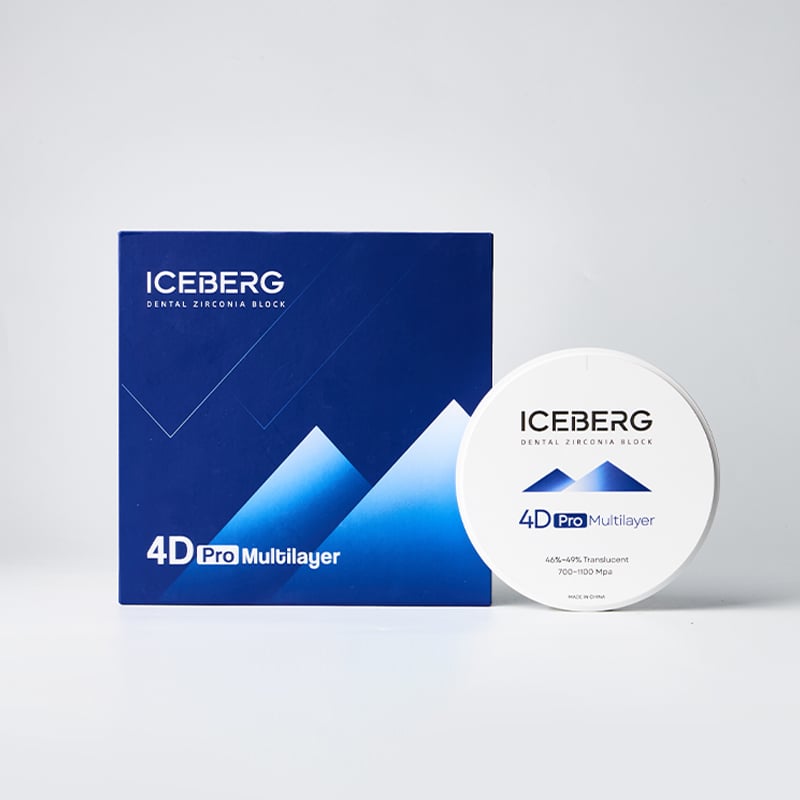
The high flexural strength of dental zirconia—commonly >1000 MPa—enables clinicians to fabricate structurally sound restorations with minimal wall thickness. This mechanical resilience permits conservative tooth preparation, preserving significantly more healthy dentin than required for metal-ceramic or lithium disilicate alternatives. Shallower preparations reduce the risk of pulp exposure, help maintain pulpal vitality, and decrease the likelihood of postoperative sensitivity. Retaining greater dentin volume also enhances the biomechanical integrity of the remaining tooth structure, supporting better periodontal health and long-term restorative success. Because monolithic zirconia restorations withstand functional loads without reinforcement, clinicians can confidently pursue minimally invasive strategies—reducing chair time, eliminating temporaries, and delivering immediate functional comfort without sacrificing durability. This synergy of strength, precision, and tissue preservation exemplifies the patient-centered evolution of modern restorative dentistry.
Dental zirconia blocks are hypoallergenic because they do not contain nickel or other reactive metals that often trigger immune reactions. Zirconia’s biocompatible nature makes it suitable for patients with metal sensitivities.
Due to its chemical inertness, zirconia does not corrode or release metal ions that provoke immune activation, leading to reduced inflammation around restorations.
CAD/CAM technology ensures an accurate, seamless fit for zirconia restorations and minimizes microgaps, thereby reducing bacterial leakage and maintaining structural integrity.
Zirconia’s low thermal conductivity and smooth surface reduce thermal sensitivity and microleakage, ensuring comfortable post-procedure healing and long-term comfort.
High flexural strength allows zirconia restorations to be created with minimal preparation, preserving more natural tooth structure and reducing risks like pulp exposure.


 EN
EN

