 ×
×
The decision to adopt digital production in a dental laboratory is relatively straightforward. The harder decision, and the one where laboratories most frequently make costly errors, is selecting the specific pieces of dental laboratory equipment that will function as an integrated system rather than a collection of standalone machines. A scanner from one manufacturer, design software from another, a mill from a third, and a sintering furnace from a fourth can create a workflow where each handoff between equipment introduces file compatibility issues, calibration drift, and operator confusion. This article provides a structured approach to selecting dental laboratory equipment that aligns with digital production goals and avoids the most common integration pitfalls.
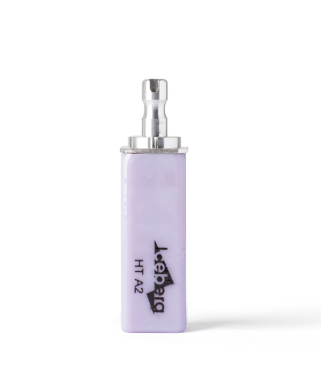
The most common mistake in dental laboratory equipment selection is beginning with the question "Which scanner should we buy?" The correct starting point is "What types of restorations do we produce, in what volumes, and to what clinical specifications?" A laboratory that produces 80 percent posterior zirconia crowns and 20 percent anterior lithium disilicate crowns needs a fundamentally different equipment configuration than one producing full-arch implant restorations, surgical guides, and removable prosthetics. Define the production mix first. Identify the three to five highest-volume restoration types and the target daily output for each. Only then can the equipment specifications be matched to actual production requirements. This output-first approach prevents the common scenario of purchasing a high-specification five-axis mill when a four-axis machine would handle 90 percent of the case mix at half the capital cost.
The laboratory scanner serves as the single point of data entry for the entire digital production line. The most consequential specification is not resolution, which is adequate across all current-generation scanners for clinical purposes, but file format compatibility. A scanner must export open-format STL or PLY files that can be imported into multiple CAD software packages. Laboratories that choose proprietary-format scanners from integrated system manufacturers sacrifice the ability to shop independently for design software, milling machines, and 3D printers as their needs evolve. Scan speed, measured as the time to complete a full-arch scan with automatic die identification, directly determines how many cases can enter the digital workflow per hour. For laboratories processing more than 30 cases per day, dual scanners or a scanner with automatic model-changing capability may be justified to prevent the data-acquisition step from becoming the production bottleneck.
CAD software is the least expensive component of a digital dental laboratory equipment setup in terms of direct capital cost, but it is the component where poor decisions cause the most operational friction. The software must handle the specific restoration types in the laboratory's case mix: crown and bridge, inlays and onlays, veneers, implant abutments and bridges, removable partial and complete dentures, and surgical guides. Each restoration type requires specific design modules that are often licensed separately. The software should also provide automated design suggestions that a technician can modify, rather than requiring every case to be designed from a blank screen. For laboratories working with multiple clinicians, cloud-based case management and clinician-approval portals reduce the communication lag that occurs when design files must be emailed back and forth for review and approval.
The milling machine represents the largest single capital expenditure in most digital laboratory conversions, and the specifications directly determine which materials and restoration types the laboratory can produce. A four-axis dry mill handles zirconia and PMMA for single units and short-span bridges. A five-axis mill adds the geometric capability for full-arch restorations, screw-retained implant bridges, and restorations with complex undercut geometries. The critical question is whether the laboratory's current and projected case mix justifies the additional cost of the fifth axis. A five-axis machine typically costs 40 to 60 percent more than a comparable four-axis model. The spindle power and torque specifications affect cutting speed and tool life, particularly in harder materials. A mill with a 500-watt or higher spindle and automatic tool-changing capability supports unattended operation over multiple units, which is essential for laboratories aiming to run the mill overnight for next-day delivery schedules.
A laboratory producing 50 units per day, split between 35 zirconia crowns, 10 lithium disilicate restorations, and 5 implant cases, would evaluate equipment as follows. The scanner requirement is straightforward: one high-speed desktop scanner handles the daily input. For CAD software, a platform that includes modules for single-unit anatomy, bridges, implant libraries, and surgical guide design avoids the need for multiple software packages. For manufacturing, two mid-range four-axis dry mills running in parallel can produce 35 zirconia crowns within an 8-hour shift, while a wet mill handles the 10 lithium disilicate cases. A sintering furnace with speed-cycle capability processes the zirconia output alongside the milling. A DLP 3D printer produces models and surgical guides in parallel. This configuration achieves the daily target without over-investing in five-axis capability that the current case mix does not require.
The equipment chain does not end with the mill or printer. Sintering furnace selection must account for the zirconia brand and sintering protocol being used. Different zirconia formulations require specific heating rates, hold times, and cooling curves. A furnace that only accommodates the standard 8-hour cycle will become the production bottleneck in a laboratory that has invested in high-speed milling. Speed-sintering furnaces complete the cycle in 60 to 90 minutes for single units, matching the output pace of a single-shift milling operation. Finishing stations with adjustable-speed handpieces, suction, and magnification allow the laboratory to maintain quality standards without creating a separate bottleneck at the final production stage. Consider the finishing throughput requirement: if a mill produces 20 crowns per shift, the finishing station must process 20 crowns in the same time frame without quality compromise.
|
Production Volume |
Scanner |
CAD Software |
Milling |
Sintering |
3D Printing |
|
Small (10-20 units/day) |
1 desktop scanner |
Basic crown & bridge |
1 four-axis dry mill |
1 standard furnace |
Optional |
|
Medium (30-50 units/day) |
1 high-speed scanner |
Full module suite |
1-2 dry mills + 1 wet mill |
1 speed-sinter furnace |
1 DLP printer |
|
Large (60-100+ units/day) |
2+ scanners |
Multi-seat license |
2+ dry mills, 1 wet, 1 five-axis |
2 speed-sinter furnaces |
2+ printers (DLP + SLA) |


 EN
EN

