 ×
×
What Every Dental Lab Technician and Procurement Professional Should Know
Zirconia has become the material of choice for high-quality dental restorations — prized for its strength, aesthetics, and biocompatibility. As the dental industry shifts toward more natural-looking, long-lasting prosthetics, zirconia’s dominance continues to grow, with monolithic zirconia restorations now accounting for 52% of crowns fabricated globally. Yet even the finest zirconia block can be rendered useless by one critical variable: sintering temperature. When a sintering furnace operates outside the manufacturer's specified range (typically 1450–1560°C for most dental zirconia), the consequences range from subtle aesthetic defects to catastrophic structural failures. For dental lab technicians tasked with delivering consistent, patient-ready results, and procurement professionals responsible for investing in reliable equipment and materials, understanding these risks is not just a best practice—it’s a necessity to protect your lab’s reputation and bottom line.
Why Sintering Temperature Matters
Sintering transforms a pre-sintered zirconia blank into a dense, crystalline restoration through a carefully controlled high-temperature process, where zirconia particles fuse together without melting to form a strong, uniform structure. At the molecular level, the tetragonal-to-monoclinic phase transformation of zirconia is highly temperature-sensitive—a process governed by atomic displacements and lattice rearrangements that dictate the material’s final properties. Zirconia naturally exists in a monoclinic phase below 1170°C, transitions to a tetragonal phase between 1170°C and 2370°C, and becomes cubic above 2370°C; proper sintering locks in the stable tetragonal phase needed for dental restorations. Deviation—whether too high or too low—disrupts crystal structure formation, creating microscopic flaws that ultimately compromise the restoration’s strength, aesthetics, and longevity. This sensitivity is why ISO 13078-3:2023 specifically mandates calibration protocols for high-temperature sintering furnaces used for zirconia, as incorrect temperatures directly lead to low strength, color discrepancies, and poor fit.
Common Problems Caused by Incorrect Temperatures
1.Under-Sintering: Haste makes waste
When temperatures fall below the required threshold:
• Incompletely sintered zirconia contains a large number of microscopic pores, which cause significant light scattering. As a result, the restoration not only fails to achieve the desired translucency but also takes on a lifeless, chalky white appearance, lacking any natural aesthetic appeal.
• Restorations become brittle and prone to fracture under normal occlusal loads.
• If the initial drying and preheating are insufficient, the low temperature will be unable to completely evaporate any residual moisture or organic matter within the material, which may result in the final colour appearing dull or greyish.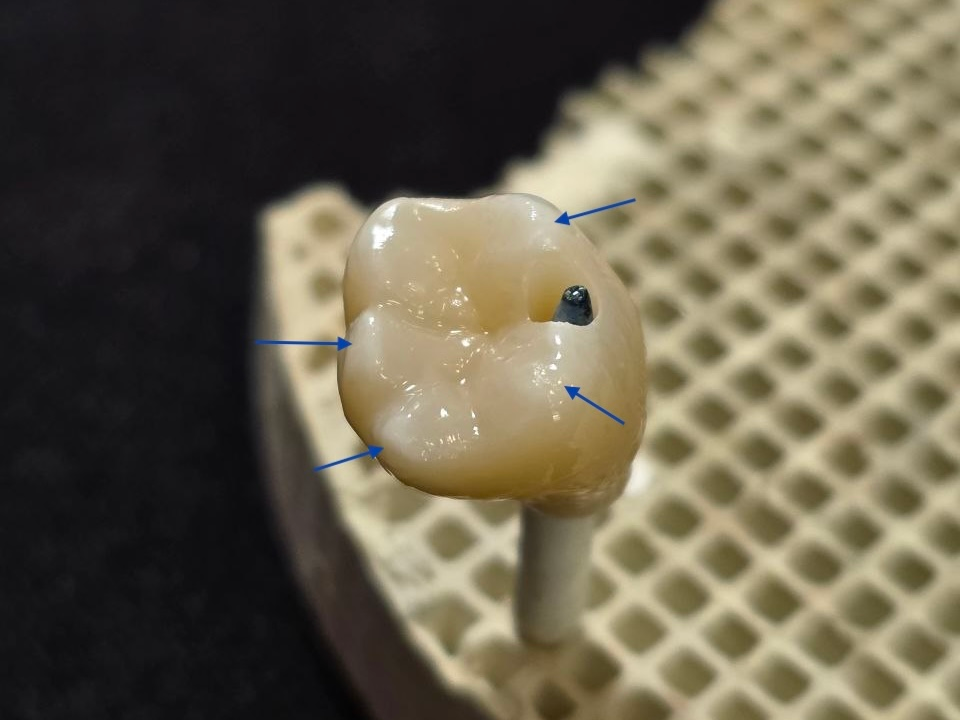
2.Over-Sintering: Grain Overgrowth and Brittleness
Excessive temperatures introduce a different set of problems:
•Abnormal grain growth weakens the zirconia microstructure, paradoxically reducing toughness despite full densification.
•Exaggerated sintering shrinkage causes dimensional inaccuracies, leading to poor marginal fit.
•Surface blistering or warping can make the restoration clinically unusable.
3.Uncontrolled heating and cooling rates: invisible ‘internal damage’
In addition to the maximum crystallisation temperature, the rates of heating and cooling are equally critical.
•Thermal stress and microcracks: Rapid heating can cause thermal stress, whilst rapid cooling can lead to microcracks that are difficult to detect with the naked eye, thereby creating a direct risk of porcelain chipping.
•Deformation of the bridge: In the case of long bridge restorations, rapid temperature changes can very easily cause the bridge to warp, ultimately making it impossible to seat it in the mouth.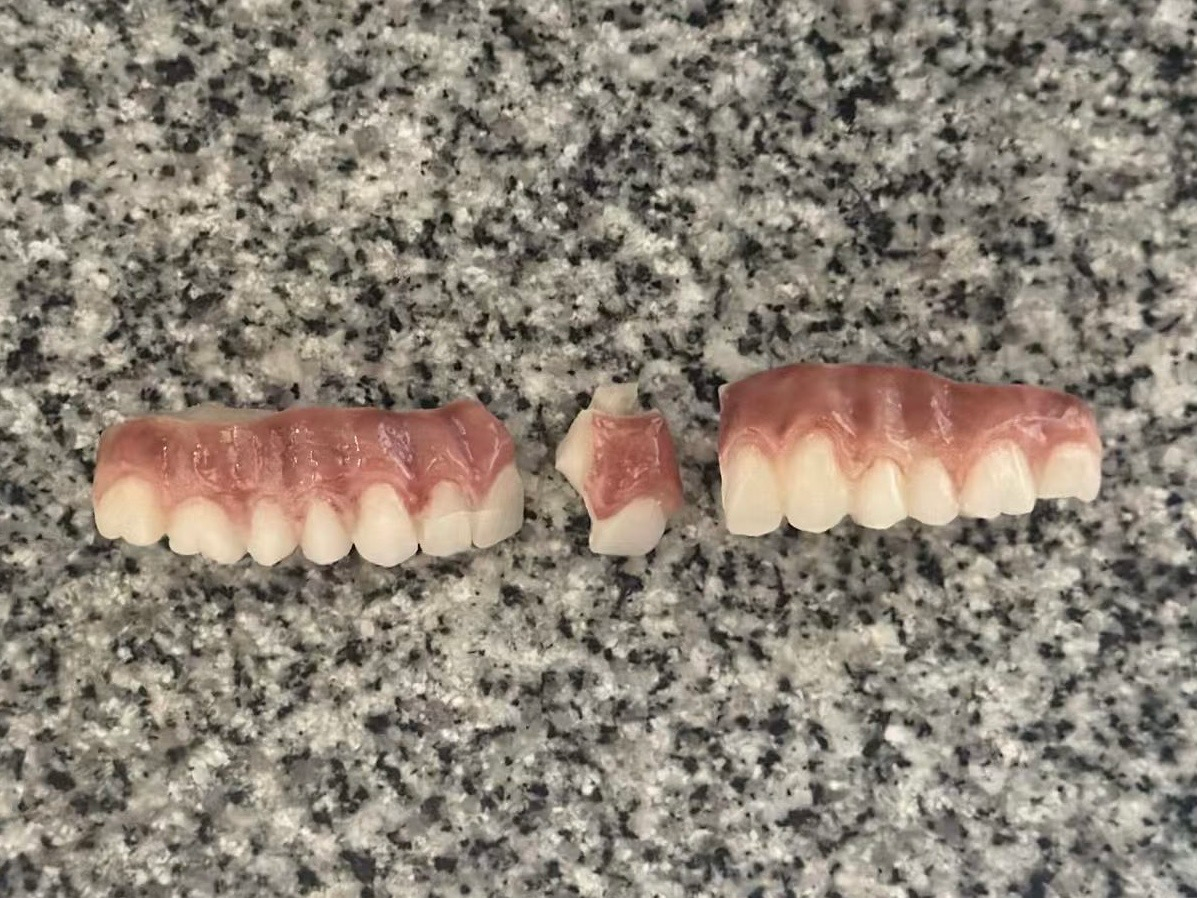
4. Furnace Temperature Inconsistency and Calibration Drift
Many laboratories underestimate how quickly sintering furnaces can fall out of calibration. Thermocouple degradation, heating element wear, and software errors can all cause a furnace to display one temperature while delivering another. Without regular verification, labs may be sintering at incorrect temperatures without realising it — producing a stream of subtly flawed restorations before the issue is identified.
The ICERA Advantage: Zirconia Blocks Built to Perform
Choosing the right zirconia block is just as critical as controlling sintering temperature. The block's formulation determines how reliably it responds to heat — and how beautifully it performs once sintered. This is where ICERA zirconia blocks stand apart.|
Key benefits of ICERA zirconia blocks include:
• Temperature-stable formulation — ICERA green bodies are specially designed using Sinocera powders to deliver predictable sintering results under standard sintering procedures, thereby minimising the risk of colour variation or structural inconsistencies caused by thermal sensitivity.
• Superior gradient reproduction — multilayer blocks achieve a smooth, natural transition from an opaque cervical region to a translucent incisal edge, faithfully replicating the aesthetics of natural dentition.
• Consistent shade accuracy across every batch, giving lab technicians the confidence to match restorations reliably without time-consuming adjustments.
• Precise dimensional control — ICERA blocks shrink uniformly during sintering, producing restorations with excellent marginal fit and minimal chairside correction.
• Outstanding value for money — comparable aesthetic and structural results to premium European zirconia blocks, without the premium price tag.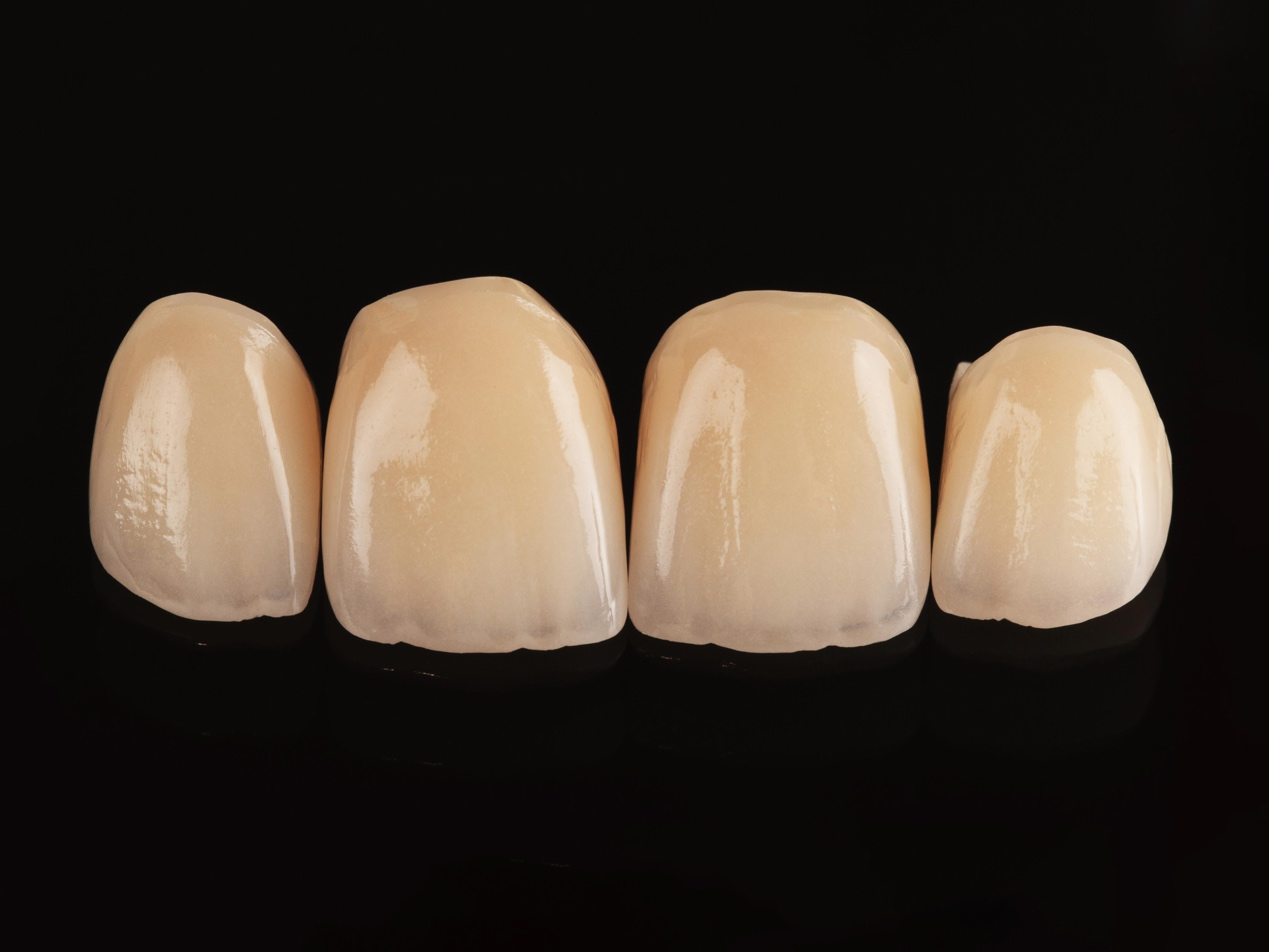
Conclusion
Zirconia blocks represent a significant investment — in materials, time, and patient trust. Subjecting them to incorrect sintering temperatures undermines that investment at every level: structurally, aesthetically, and financially. For dental lab technicians who demand predictable, beautiful results, and for procurement professionals who need to justify every purchase, the quality of the zirconia block itself is the foundation of every successful restoration.
ICERA zirconia blocks are built to withstand the demands of professional sintering and deliver the gradient depth and colour fidelity that modern restorations require — with the cost-efficiency that forward-thinking laboratories deserve. When the margin for error is measured in microns and shades, start with a block that gets it right.


 EN
EN

