 ×
×
Building enduring trust in global dental aesthetics through ultimately stable materials and services
In global dental aesthetics, the gap between a product that looks right and one that performs reliably over years of use can be vast. For clinicians and laboratories sourcing zirconia blocks from overseas manufacturers, that gap is often invisible — hidden behind polished brochures, competitive pricing, and vague claims of “high quality.” A zirconia block may appear flawless on the surface, but subtle inconsistencies in its microstructure or composition can lead to catastrophic failures: a crown chipping during placement, a bridge warping after sintering, or a restoration discoloring within months of use. At ICERA, we believe the answer to this uncertainty is radical transparency: transparency about how our materials are selected, how each block is formed, how every production step is monitored, and how it is rigorously inspected before it ever leaves our facility.
Our vision — to build enduring trust in global dental aesthetics through ultimately stable materials and services — is not a tagline printed on our packaging. It is the operating principle behind every decision made on our production floor, every quality check performed, and every batch of zirconia we ship to dental labs and distributors worldwide. For us, reliability is not an add-on; it is built into every particle of powder, every press of the machine, and every inspection we conduct.
The Foundation: Raw Material Selection
Everything begins with powder. Zirconia's clinical performance — its strength, translucency, and dimensional stability — is determined first by the purity and consistency of the raw material from which it is pressed. ICERA exclusively uses Sinocera brand zirconia powder, a brand recognised globally for its quality, with strictly controlled particle size distribution and stabiliser content. Every batch of incoming raw material undergoes chemical composition verification and particle characterisation analysis before entering the production process.
We do not treat raw material selection as a procurement function. We treat it as the first quality gate — because no downstream process, however precise, can compensate for an inconsistent starting material.
Pressing and Moulding
Once the powder has passed incoming inspection, it is prepared for dry pressing. The powder is filled into precision-machined dies under controlled environmental conditions, and uniaxial pressure is applied to form the initial compact. Die geometry, fill uniformity, and applied pressure are all monitored to ensure that each green body achieves the target density before advancing to the next stage.
Consistency at this stage is critical. A non-uniform green body will respond unevenly to subsequent processing — producing internal stresses that can manifest as micro-cracks or warping long after the block has reached a dental laboratory.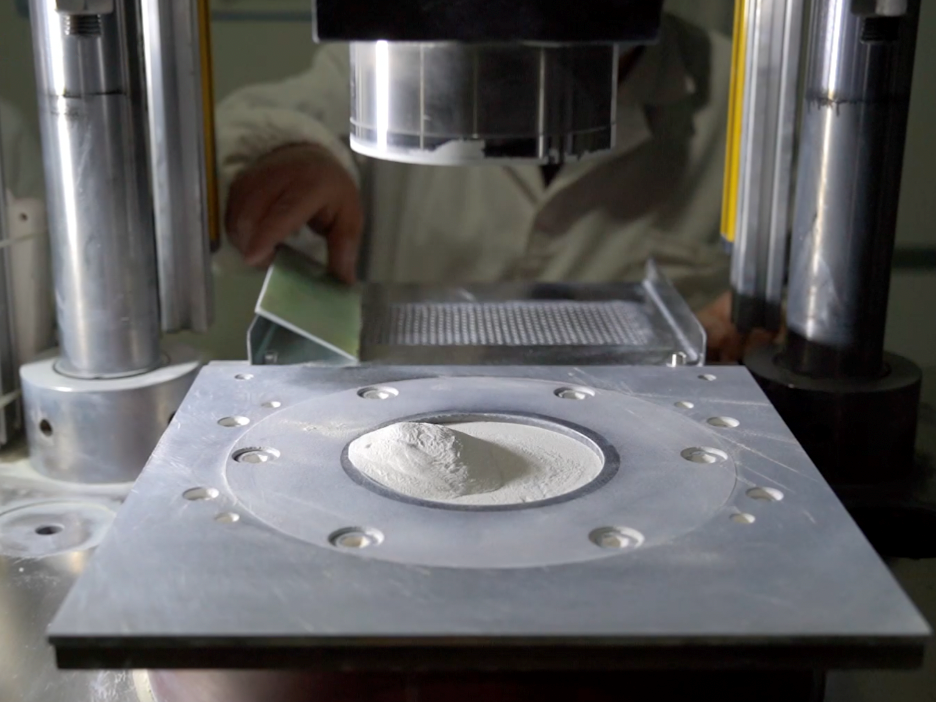
Cold Isostatic Pressing
Following initial die pressing, every ICERA zirconia block undergoes cold isostatic pressing (CIP). In this process, the green compact is sealed and subjected to uniform hydrostatic pressure from all directions — typically in the range of 200 MPa. This eliminates the density gradients inherent in uniaxial pressing and produces a homogeneous, near-net-shape compact with a significantly more uniform microstructure.
CIP is not universally adopted across the industry. For ICERA, it is non-negotiable. The structural integrity that CIP confers is what allows our blocks to machine predictably and sinter consistently — qualities that clinicians depend on for accurate restorations.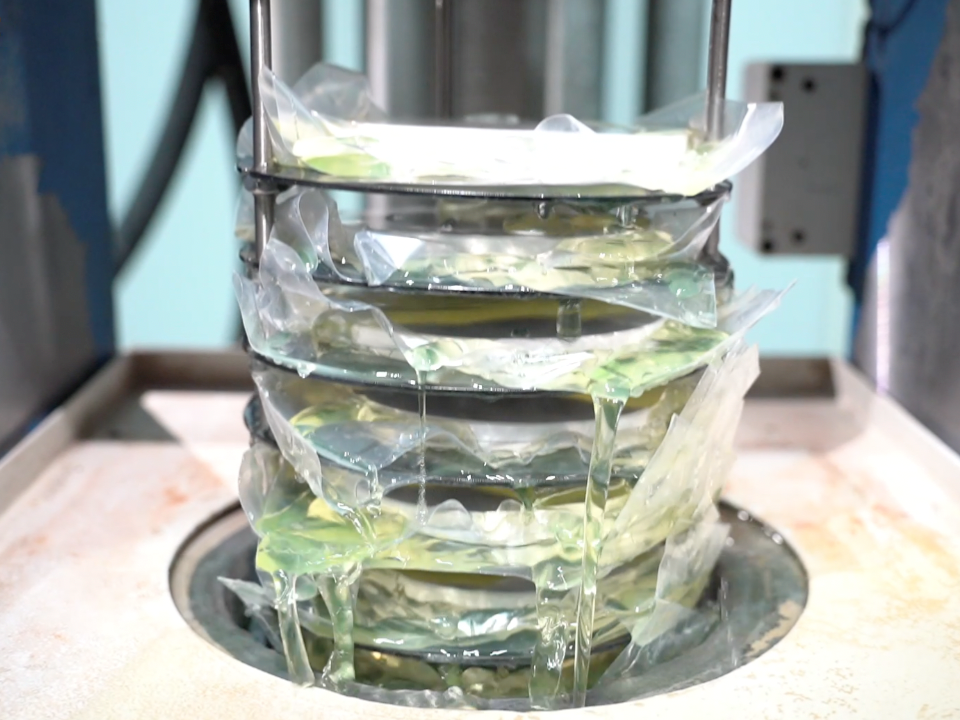
Pre-Sintering
The consolidated compact is then placed in a controlled-atmosphere furnace for pre-sintering. This thermal process burns off any organic binders, initiates partial densification, and imparts the chalk-like machinability that makes the block suitable for CAD/CAM milling. Temperature profiles — ramp rate, hold temperature, hold duration, and cooling rate — are precisely programmed and logged for each furnace cycle.
Pre-sintering determines the final milling characteristics of the block. Too low, and the block is fragile and prone to chipping during machining. Too high, and it becomes too hard to mill efficiently, shortening tool life and risking dimensional inaccuracy. ICERA's furnace protocols have been refined through extensive empirical testing to achieve the optimal balance between machinability and structural cohesion.
Machining
Pre-sintered blocks are machined to their final dimensional form — the standardised disc or block geometries required by major open-architecture CAD/CAM systems. Machining tolerances are held to within fractions of a millimetre, ensuring predictable seating in milling unit holders and accurate scaling calculations during restoration design.
Surface finish, edge integrity, and dimensional conformance are all assessed at this stage. Any block showing evidence of surface contamination, edge chipping, or dimensional deviation is rejected and does not proceed to final inspection.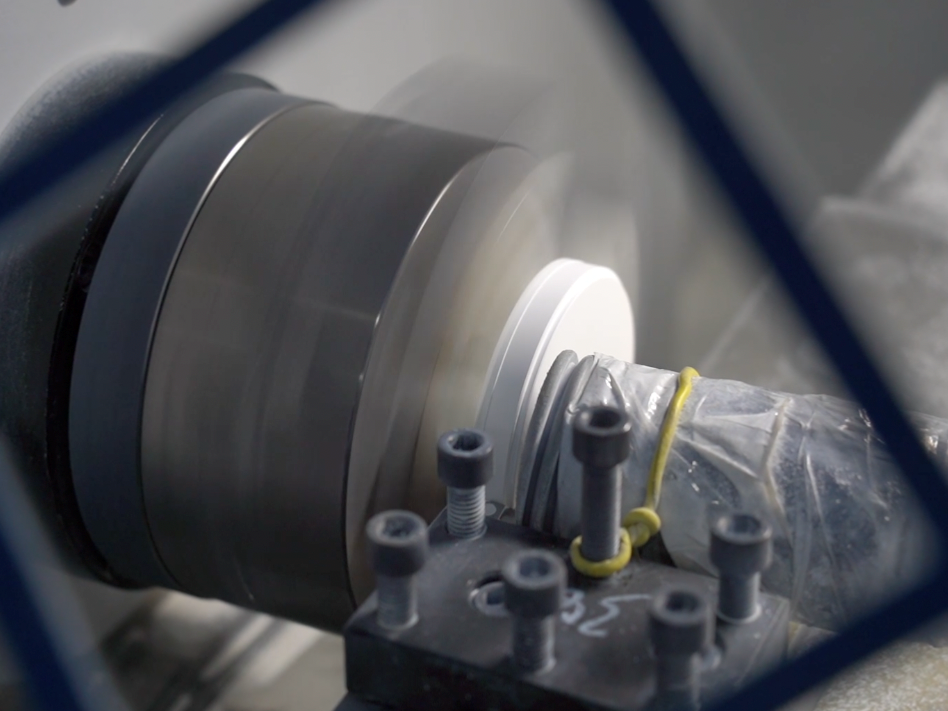
Quality Control and Pre-Dispatch Inspection
Before any batch is released for shipment, it undergoes a multi-point quality control inspection. This includes dimensional verification against specification, visual inspection for surface defects, and sampling-based mechanical assessment. Batch traceability is maintained throughout — from the raw powder lot through each production stage to the finished block — so that any quality event can be investigated back to its root cause.
Our quality control philosophy is not to catch defects at the end of the process. It is to prevent them from forming in the first place, through the discipline applied at every earlier stage. Final inspection is the confirmation of quality already built in — not a filter for quality that may or may not have emerged.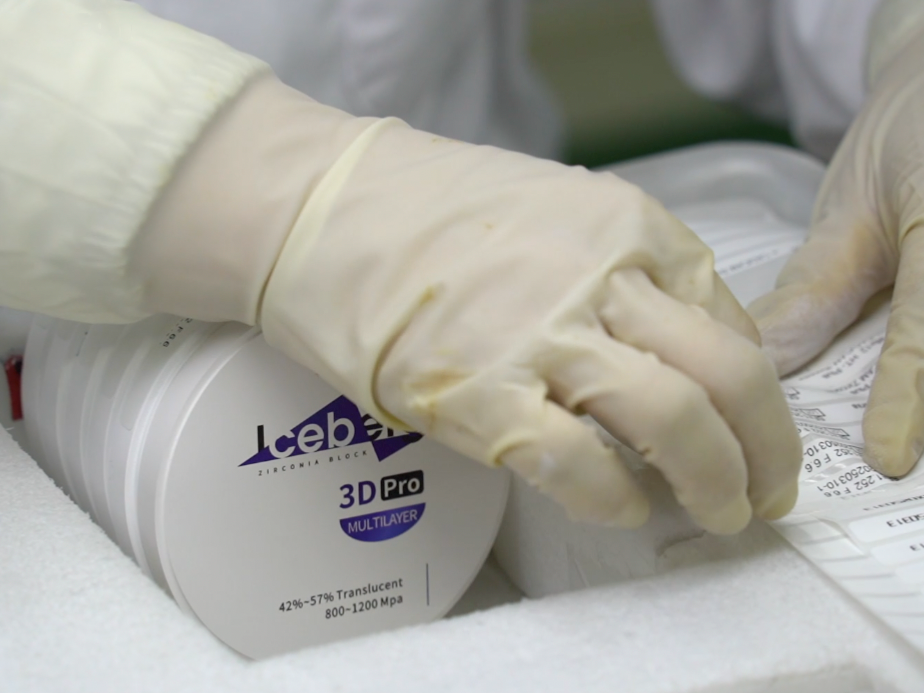


 EN
EN

